How Much Drywall Do I Need?
· By DIY Calc
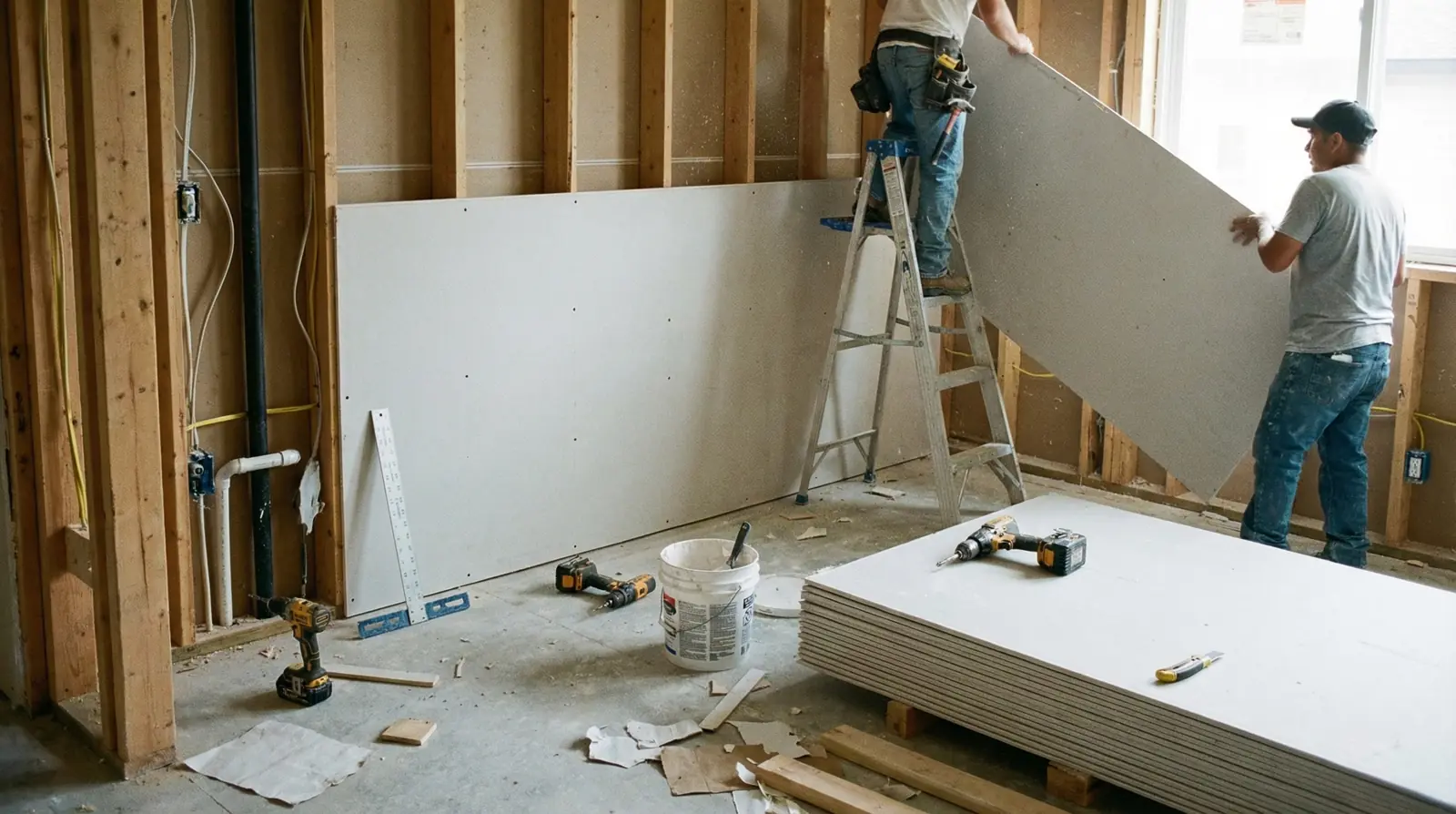
Quick answer: Calculate total wall area (perimeter × height), subtract doors (21 sq ft each) and windows (15 sq ft each), add ceiling if needed, then divide by 32 (the area of one 4×8 sheet). Add 10% for waste. A standard 12×12 room with 8-foot ceilings needs about 18 sheets including ceiling.
Skip the math, use our free Drywall Calculator →
The Step-by-Step Formula
- Calculate wall area: Perimeter (2 × length + 2 × width) × ceiling height
- Subtract openings: Standard door = 21 sq ft, standard window = 15 sq ft
- Add ceiling: Length × width (if applicable)
- Divide by 32: Each 4×8 sheet = 32 sq ft
- Add 10% waste: For cuts, damaged sheets, and mistakes
Example: 12×14 Room, 8ft Ceilings, 1 Door, 2 Windows
Perimeter: 2(12 + 14) = 52 ft
Wall area: 52 × 8 = 416 sq ft
Subtract openings: 416 - 21 - 30 = 365 sq ft
Ceiling: 12 × 14 = 168 sq ft
Total: 365 + 168 = 533 sq ft
Sheets: 533 ÷ 32 = 16.7 → 17 sheets
With 10% waste: 19 sheets
Beyond Sheets: The Full Materials List
Sheets are just the start. Here's everything you need for a complete drywall job:
Drywall Screws
Use 1-1/4" coarse-thread drywall screws for 1/2" drywall on wood studs. Plan for about 32 screws per sheet, that's screws every 12" along edges and 16" in the field. One pound contains about 150 screws, so a typical room needs 3–5 pounds.
Joint Tape
Budget roughly 12 feet of tape per sheet of drywall. A standard roll is 75 feet. Paper tape is stronger for corners; mesh tape is easier for flat seams but requires setting-type compound for the first coat.
Joint Compound (Mud)
The biggest variable in drywall finishing. Plan for approximately 1 gallon per 100 square feet for three coats. A 4.5-gallon bucket covers about 450 sq ft. First-timers should buy an extra bucket, you'll sand through some spots and need to recoat.
Corner Bead
Every outside corner needs corner bead. Measure the height of each outside corner and buy 8-foot or 10-foot sticks. Paper-faced corner bead is easier to finish than metal for beginners.
Choosing the Right Drywall
- Regular (white): Standard 1/2" for most walls and ceilings
- Moisture-resistant (green board): For bathrooms and laundry rooms, NOT for direct water exposure
- Mold-resistant (purple): Fiberglass-faced for high-humidity areas
- Fire-rated (Type X): 5/8" thick, required for garage-to-house walls and some ceilings
- Lightweight: About 25% lighter than standard, much easier to handle for ceiling installation
Tips for First-Timers
- Hang ceilings first, then walls. Wall sheets support the ceiling edges.
- Stagger seams, never align joints on adjacent sheets.
- Don't over-drive screws, the paper face should dimple slightly, not break through.
- Three thin coats of mud beat one thick coat every time.
- Sand between coats with 120-grit, then finish with 150-grit.
- Use a bright work light held at an angle to spot imperfections before painting.
Cost Estimates
Here's what to budget per sheet of 4×8 1/2" drywall:
- Regular: $10–$15 per sheet
- Moisture-resistant: $14–$18 per sheet
- Fire-rated: $13–$17 per sheet
For a complete 12×12 room (walls + ceiling), expect to spend $250–$400 on all materials including sheets, screws, tape, mud, and corner bead.